A Brief History of Tug of War in Ireland
Tug of war has evolved in Ireland from a traditional pastime at parish sports days
and fairs into a modern, internationally recognised sport. This page traces that
journey from early informal contests to the present day.
Early Development of the Sport in Ireland
For generations, tug of war has been a feature of Irish community life. Local teams often met at parish sports days, agricultural shows and village fairs, where “the strongest able-bodied men” of the area would line up on the rope in friendly rivalry. These events helped cement tug of war as a popular test of strength, teamwork and pride between neighbouring communities.
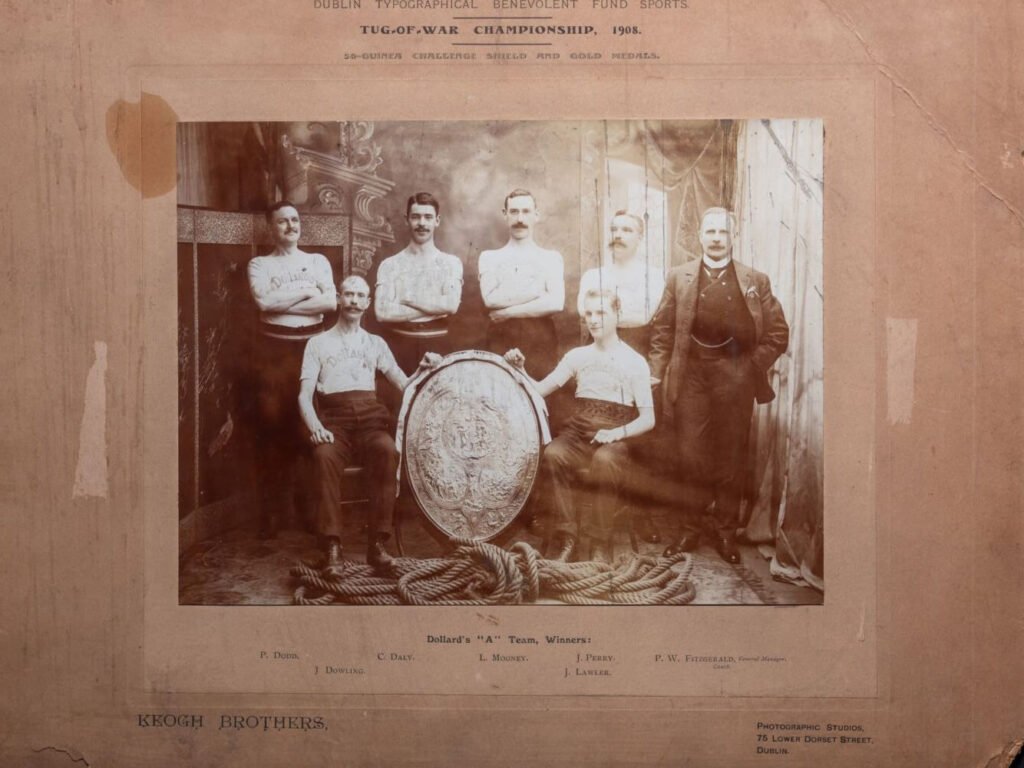
Tug of war also appeared in more formal competition during the early years of the twentieth century. Irish competitors took part in the sport at a time when tug of war was included on the programme of the Olympic Games (1900–1920), and period
photographs show organised championship events taking place in Dublin in 1908.
Formation of the National Governing Body (1967)
The modern, organised era of tug of war in the Republic of Ireland began in 1967. That year, the Irish Tug of War Association was founded at a meeting held at the Guinness / Iveagh Grounds in Dublin. The first national championship event followed shortly afterwards at the same venue.
The creation of a national governing body brought structure and consistency to the sport. Standardised rules were adopted, regular national championships were organised, and clubs began to form across the country to compete at a variety of weight classes.
Growth and International Competition
As the sport developed, Ireland affiliated with the Tug of War International Federation (TWIF), the worldwide
governing body for tug of war. This affiliation allowed Irish teams to compete at European and World Championships, both indoors and outdoors, and aligned domestic rules with international standards.
Irish national and club teams quickly became competitive on the international stage. Over the years, Irish sides have earned medals at European and World Championships, reflecting the strength of the sport at home. In 2009, for example, Ireland’s men’s 680 kg team won gold at the European Championships in Assen, Netherlands. In 2014, an Irish team captured a World Championship title on home soil in Castlebar, Co. Mayo.
Irish clubs have also enjoyed global success. Teams such as the Clonmany Tug of War Club in Co. Donegal have won world titles, underlining the depth of talent and strong club culture that exists throughout the country.
Ireland Playing Host to Major International Events
Ireland has played a prominent role as a host nation for major international tug of war events. Notable examples include:
- 1992 – World Outdoor Tug of War Championships,
Mosney, Co. Meath - 2014 – World Indoor Championships for nations,
Castlebar, Co. Mayo - 2019 – European Senior & World U23 and Junior Outdoor
Championships, Castlebar, Co. Mayo - 2020 – World Indoor Championships, Letterkenny,
Co. Donegal
These events have brought thousands of athletes and supporters from across the world to Ireland, and have showcased the quality of Irish organisation and the passion of the tug of war community.
Tug of War in Ireland Today
In 2020, the national governing body was reconstituted and incorporated under the
name Tug of War Ireland, succeeding the former Irish Tug of War
Association. The organisation continues to oversee national indoor and outdoor
championships, support club development and coach education, and coordinate
Irish representation at European and World level.
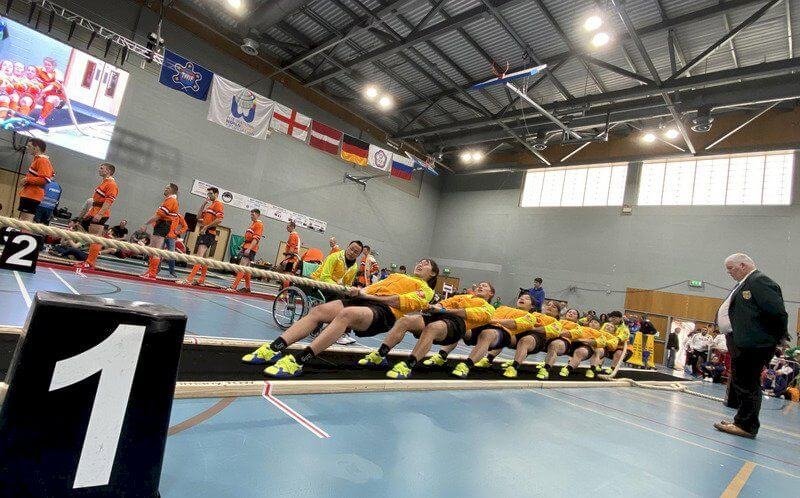
Today, tug of war in Ireland is a year-round sport with a strong club
infrastructure, active schools and youth programmes, and regular success for
Irish teams and pullers on the international stage. From its roots in parish
fields to World Championship arenas, tug of war remains an important and growing
part of Ireland’s sporting heritage.